
Regrowing your edges after damage or thinning can be a real game-changer for your hair, and a potent, natural ally in this journey is Lwil Maskriti, also known as Haitian Black Castor Oil (HBCO). The short answer to “how can I regrow my edges using Lwil Maskriti?” is a consistent, gentle application directly to the thinning areas, combined with good hair care practices that support growth and prevent further damage. It’s not a magic bullet, but a powerful tool in your edge-regrowth arsenal when used correctly.
Before we dive into the “how-to,” it’s helpful to understand what your edges are and why they might be thinning in the first place. This isn’t just about appearance; it’s about the health of your hair follicles.
Defining Your Edges
Your “edges” refer to the delicate hairs that frame your face, particularly around your hairline temples and nape. These hairs are often finer and more fragile than the hair on the rest of your scalp. Because of their delicate nature and their position, they are highly susceptible to stress and damage.
Common Causes of Edge Thinning
Several factors can contribute to thinning edges. Identifying the cause can help you not only regrow but also prevent future issues.
Tight Hairstyles
This is probably the most common culprit. Styles like tight braids, ponytails, weaves, or even headbands that pull consistently on the hairline can lead to traction alopecia. This is a form of hair loss caused by prolonged tension on the hair follicles, eventually damaging them to the point where they stop producing hair.
Chemical Damage
Repeated exposure to harsh chemicals from relaxers, dyes, or perms can weaken the hair strand and irritate the scalp, leading to breakage and follicle damage, especially in the more delicate edge area.
Heat Styling
Frequent use of hot tools like flat irons, curling irons, or even blow dryers directly on the delicate edges can cause dryness, breakage, and damage to the hair follicles over time.
Nutritional Deficiencies
Your hair, like the rest of your body, needs proper nutrition to grow. Deficiencies in vitamins like Biotin, Vitamin D, or minerals like Iron can hinder healthy hair growth, including your edges.
Hormonal Changes
Fluctuations in hormones, often seen during pregnancy, postpartum, menopause, or conditions like PCOS, can impact hair growth cycles and lead to thinning, including at the hairline.
Stress
Chronic stress can disrupt the natural hair growth cycle, pushing more hairs into the resting (telogen) phase and leading to increased shedding.
Genetics
Unfortunately, sometimes thinning edges are simply genetic. If hair loss runs in your family, you might be more prone to it yourself. While Lwil Maskriti can help stimulate growth, understanding this factor is important for managing expectations.
Improper Product Use
Using products with harsh sulfates, alcohols, or heavy fragrances can unnecessarily dry out and irritate the scalp and hair around your edges, contributing to breakage and thinning.
If you’re interested in learning more about the benefits of Haitian Black Castor Oil, you might find the article on the origins of this traditional beauty secret particularly enlightening. It explores the rich history and cultural significance of Haitian Black Castor Oil, providing valuable context for its use in hair care routines. For more information, check out the article here: Exploring the Origins of Haitian Black Castor Oil: A Traditional Beauty Secret.
What is Lwil Maskriti (Haitian Black Castor Oil)?
Let’s get to know the star of the show. Lwil Maskriti isn’t just regular castor oil; it has a unique processing that makes it particularly effective.
Haitian vs. Jamaican Black Castor Oil
You might have heard of Jamaican Black Castor Oil (JBCO), and while similar, Lwil Maskriti has its own distinct characteristics. Both are made by roasting castor beans before pressing, which is what gives them their characteristic dark color and somewhat smoky scent. This roasting process is believed to increase the oil’s alkalinity, which some proponents suggest enhances its ability to penetrate and stimulate the scalp.
The Roasting Process Makes a Difference
Unlike clear, cold-pressed castor oil, where the beans are simply pressed, Lwil Maskriti involves roasting castor beans to a specific degree. This roasting allows for the ash and other beneficial compounds to be incorporated into the oil during extraction. The ash, in particular, is thought to contribute to its higher pH level, which can help clarify the scalp and open up hair follicles.
Key Components of Lwil Maskriti
The magic of Lwil Maskriti lies in its rich composition. It’s not just a simple oil.
Ricinoleic Acid
This is the superstar fatty acid in castor oil, making up about 90% of its content. Ricinoleic acid is known for its anti-inflammatory properties, which can help soothe irritated scalps. More importantly for hair growth, it’s believed to improve blood circulation to the scalp. Enhanced blood flow means more nutrients and oxygen reach the hair follicles, which are crucial for healthy hair growth.
Omega-6 and Omega-9 Fatty Acids
These essential fatty acids play a role in maintaining the health and elasticity of the hair strand and scalp. They help to nourish the hair follicles and scalp, contributing to a healthy environment for hair growth.
Vitamin E
A powerful antioxidant, Vitamin E helps protect the hair follicles from damage by free radicals. It also supports healthy scalp circulation, further contributing to a conducive environment for hair growth.
Minerals
Lwil Maskriti also contains various minerals, which, while in smaller quantities, collectively contribute to overall hair and scalp health.
How it Helps Regrow Edges
So, how does this all translate to edge regrowth?
Stimulates Blood Circulation
The ricinoleic acid is thought to be the primary driver here. By improving blood flow to the hair follicles along your hairline, it ensures they receive a constant supply of the nutrients needed to produce strong, healthy hair. This can “wake up” dormant follicles and encourage new growth.
Anti-inflammatory Properties
If your thinning edges are due to inflammation or irritation of the scalp (often seen with traction, chemical burns, or certain scalp conditions), Lwil Maskriti’s anti-inflammatory properties can help calm the scalp, creating a healthier environment for hair to grow.
Moisturizes and Strengthens
Lwil Maskriti is a thick, emollient oil. When applied, it deeply moisturizes the scalp and strengthens the delicate hair strands around your edges, reducing breakage. Stronger hair means less breakage and more retention of the hair you do grow.
Creates a Protective Barrier
Its thickness also allows it to form a protective layer around the hair shaft, shielding it from environmental damage and reducing moisture loss, which is crucial for fragile incoming hairs.
Preparing for Edge Regrowth: Essential Steps

Before you even touch that bottle of Lwil Maskriti, there are some crucial steps to take. Without these, even the best oil won’t give you optimal results.
Stop the Damage
This is non-negotiable. If you continue the practices that caused your edges to thin, you’ll be fighting an uphill battle.
Avoid Tight Hairstyles
Loosen up! Say goodbye to tight braids, weaves, ponytails, and any style that pulls on your hairline. Opt for looser, protective styles that don’t stress your edges. If you’re wearing braids, instruct your stylist to leave your edges out or braid them very loosely.
Limit Heat Styling
Give your edges a break from direct heat. If you must use heat, use a heat protectant and keep the temperature low. Consider air drying your edges.
Reconsider Chemical Treatments
If relaxers or harsh dyes are part of your routine and your edges are suffering, it might be time to reduce their frequency or switch to gentler, natural alternatives. Patch tests are crucial if you do continue with chemicals.
Review Your Hair Products
Not all hair products are created equal, and some can sabotage your efforts.
Ditch Harsh Ingredients
Look for products free from sulfates, parabens, alcohol, and heavy mineral oils that can dry out and suffocate your hair follicles. Opt for gentle, nourishing shampoos and conditioners.
Embrace Protective Styles
While your edges are recovering, protective styles that don’t pull are your friends. Think loose twists, buns, or even simply letting your hair down. When wrapping your hair at night, use a silk or satin scarf, never cotton, as cotton absorbs moisture and can cause friction and breakage.
Improve Your Diet and Hydration
What you put into your body directly impacts your hair’s health.
Nutrient-Rich Foods
Incorporate foods rich in Biotin (eggs, nuts, sweet potatoes), Iron (leafy greens, red meat), Omega-3s (fatty fish, flaxseed), and Vitamins A, C, and E. These are essential building blocks for healthy hair.
Stay Hydrated
Drinking enough water is fundamental for all bodily functions, including hair growth. Well-hydrated cells perform their functions more efficiently.
How to Apply Lwil Maskriti for Edge Regrowth

Now for the practical how-to. Consistency and correct application are key here.
The Tools You’ll Need
Gather your supplies before you start.
Lwil Maskriti (Haitian Black Castor Oil)
Ensure you’re getting genuine Lwil Maskriti. Look for reputable brands and read reviews. It should be thick and dark.
Applicator Bottle or Dropper
This makes it much easier to apply the oil directly to your scalp without wasting it or getting it all over your hair. A small nozzle allows for precision.
Gentle Scalp Massager (Optional, but Recommended)
A good scalp massage can further boost blood circulation. You can use your fingertips, but a dedicated scalp massager can be very effective and relaxing.
Silk or Satin Scarf/Bonnet
Crucial for protecting your edges overnight and preventing friction.
Step-by-Step Application Guide
Follow these steps for effective application.
Step 1: Cleanse Your Scalp (Occasionally)
While you’ll be applying oil frequently, ensure your scalp is clean for deeper penetration. When you wash your hair, use a gentle, sulfate-free shampoo. Over-applying oil to a dirty scalp can lead to clogged pores.
Step 2: Section Your Hair
Gently part your hair around your edges to expose the thinning areas. You want to apply the oil directly to the scalp, not just to your hair.
Step 3: Apply the Oil
Using your applicator bottle or dropper, apply a small amount of Lwil Maskriti directly to your scalp along your hairline where your edges are thinning. A little goes a long way with this thick oil. Aim for a light coating, not a heavy saturation. If you put too much, your hair will look greasy, and it won’t necessarily be more effective.
Step 4: Gentle Massage
This is a critical step. Using your fingertips (or a scalp massager), gently massage the oil into your scalp for 2-5 minutes. Use circular motions. The massage isn’t just for spreading the oil; it significantly boosts blood circulation to the hair follicles, enhancing the oil’s effects. Be very gentle; aggressive rubbing can further damage already delicate edges.
Step 5: Leave-In or Rinse?
You have a couple of options here, depending on your hair type and preference.
Overnight Treatment
This is often the most effective method. Apply the oil and massage before bed. Cover your hair with a silk or satin scarf or bonnet to protect your pillow and keep the oil in place. Wash your hair in the morning if you find it too heavy or greasy to leave.
Several Hours Treatment
If you don’t like sleeping with oil in your hair, apply it a few hours before you plan to wash your hair. This gives the oil enough time to penetrate the scalp and follicles.
Leave-In (for very dry hair)
For some hair types, especially very dry ones, a tiny amount can be left in without rinsing. Judge based on how your hair feels. If it looks greasy, you’ve used too much or should rinse it.
Step 6: Wash Hair (if rinsing)
When you do wash your hair, use a gentle shampoo to remove any excess oil, followed by a nourishing conditioner.
Frequency of Application
Consistency is key, but don’t overdo it.
Daily Application
For significant thinning, apply a small amount daily or every other day, focusing on the massage.
2-3 Times a Week
If your thinning is mild or as a maintenance routine, 2-3 times a week might be sufficient.
Listen to your scalp. If it feels greasy or your pores start to feel clogged, reduce the frequency.
If you’re looking to enhance your hair care routine while focusing on regrowing your edges, you might find it beneficial to explore the potential of natural ingredients. One such ingredient is Lwil Maskriti, also known as Haitian Black Castor Oil, which has been praised for its nourishing properties. For those interested in holistic approaches to health, you can also check out an article on cinnamon and its potential weight loss benefits, which highlights how natural remedies can play a significant role in overall wellness. Integrating these natural solutions could lead to improved hair growth and overall health.
Complementary Practices for Edge Regrowth Success
| Benefits of Lwil Maskriti (Haitian Black Castor Oil) | How to Use | Tips for Regrowing Your Edges |
|---|---|---|
| Moisturizes scalp and hair | Apply a small amount to the edges and massage gently | Avoid tight hairstyles that pull on the edges |
| Stimulates hair growth | Use a few times a week for best results | Avoid excessive heat and chemical treatments |
| Strengthens hair follicles | Leave it on overnight for deep conditioning | Be patient and consistent with application |
Lwil Maskriti is powerful, but it works best as part of a holistic approach.
Mindful Hair Handling
Be extra gentle with your edges at all times.
Detangling
Always detangle your hair from the ends up, using a wide-tooth comb or your fingers. Apply a leave-in conditioner or detangling spray to make the process easier. Avoid pulling or tugging at your hairline.
Styling
When creating any style, pay attention to your edges. Are they being pulled? Are grips or pins too tight? Loosen up.
Scalp Health
A healthy scalp is the foundation for healthy hair.
Regular Cleansing (Gentle)
Ensure your scalp is clean to prevent product buildup that can clog follicles. Use gentle, sulfate-free shampoos.
Moisturizing
Your scalp needs moisture too! After washing, consider a light leave-in conditioner or a natural oil blend (besides HBCO) if your scalp tends to be dry.
Internal Support
Your diet and lifestyle choices have a huge impact.
Balanced Nutrition
Reiterate the importance of a diet rich in vitamins, minerals, and proteins. If you suspect deficiencies, talk to a doctor about blood tests.
Supplements (Consult a Doctor)
While not a replacement for a healthy diet, some supplements like Biotin, Collagen, or a good multivitamin can support hair growth. Always consult with a healthcare professional before starting any new supplements, especially if you have underlying health conditions.
Manage Stress
Find healthy ways to manage stress, whether it’s through exercise, meditation, hobbies, or spending time in nature. Reduced stress can positively impact hair growth.
If you’re looking to enhance your hair care routine, you might find it beneficial to explore the culinary uses of ingredients like coffee, which can also be applied to hair health. For instance, an article on the various ways to use coffee beyond just drinking it discusses how its properties can stimulate hair growth and improve scalp health. You can read more about these intriguing applications in the article found here. This connection between culinary ingredients and hair care can provide you with a holistic approach to nurturing your edges alongside using Lwil Maskriti (Haitian Black Castor Oil).
What to Expect and How to Track Progress
Regrowing edges is a journey, not a sprint. Patience and realistic expectations are vital.
Timeline for Results
Don’t expect overnight miracles. Hair growth is a slow process.
Initial Changes (4-8 weeks)
You might first notice less shedding and a slight increase in baby hairs or fuzz along your hairline. The texture of existing hairs might also feel stronger and more hydrated.
Visible Growth (3-6 months)
More noticeable growth, with the baby hairs becoming slightly longer and thicker. You’ll likely see a definite improvement in density.
Full Results (6-12 months and beyond)
For significant regrowth and improved density, it can take anywhere from 6 to 12 months, or even longer, depending on the severity of the initial damage and how consistently you follow the routine. Hair growth also occurs in cycles, so there will be periods of growth and rest.
Documenting Your Progress
This can be incredibly motivating!
Before and After Photos
Take clear photos of your edges in good lighting every 4-6 weeks. This will help you visually track progress, which might be subtle day-to-day. You’ll be surprised by the difference when you compare photos over several months.
Journaling
Note down the products you’re using, how often you apply Lwil Maskriti, and any changes you observe (less shedding, new growth, changes in hair texture). This can help you identify what works best for you.
Potential Side Effects and Considerations
While Lwil Maskriti is natural, it’s potent.
Allergic Reactions
Though rare, some people might be sensitive to castor oil.
Patch Test
Always perform a patch test on a small, inconspicuous area of your skin (like behind your ear or on your inner forearm) before applying it all over your edges. Wait 24-48 hours to check for any redness, itching, or irritation.
Clogged Pores/Acne
Lwil Maskriti is thick. If not applied sparingly or if your scalp isn’t kept clean, it can potentially clog pores and lead to pimples or irritation.
Apply Sparingly
Use a small amount. You don’t need to drench your scalp.
Regular, Gentle Cleansing
Ensure your scalp is cleaned regularly, especially if you’re applying the oil daily.
Oily Hair
If you have naturally oily hair or use too much, your hair might appear greasy. Adjust the amount and frequency of application accordingly.
Regrowing your edges with Lwil Maskriti is a commitment requiring patience and consistency. By understanding the causes of thinning edges, properly applying this potent oil, and coupling it with thoughtful hair care and a healthy lifestyle, you significantly increase your chances of seeing thicker, healthier edges frame your face once again. Keep at it, stay gentle, and trust the process.
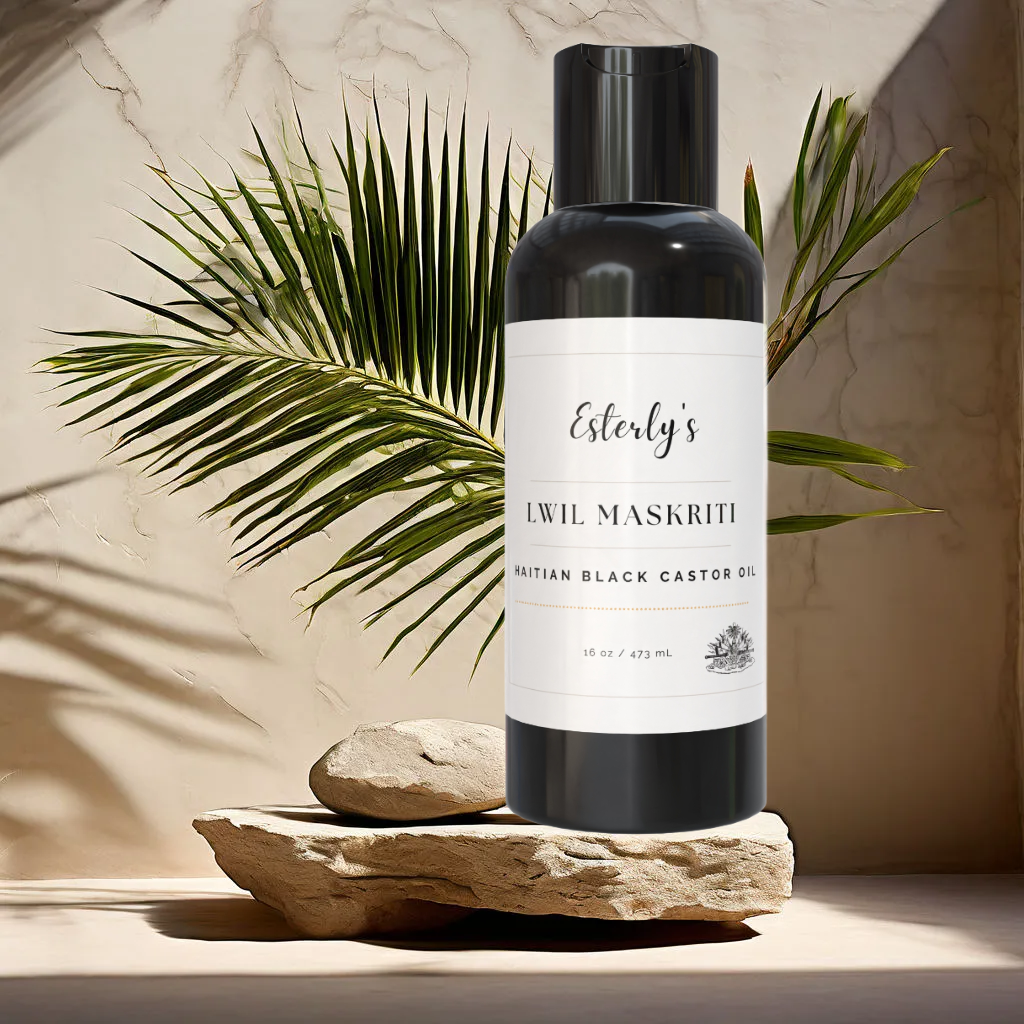
Lwil Maskriti – Haitian Black Castor Oil for Long Hair and Glowing Skin
FAQs
What is Lwil Maskriti (Haitian Black Castor Oil)?
Lwil Maskriti, also known as Haitian Black Castor Oil, is a natural oil derived from the castor bean plant. It is a popular hair care product known for its potential to promote hair growth and improve the overall health of the hair and scalp.
How does Lwil Maskriti (Haitian Black Castor Oil) help regrow edges?
Lwil Maskriti is believed to stimulate hair follicles, leading to increased hair growth. It also has moisturizing properties that can help nourish the scalp and promote healthier hair growth, which can be beneficial for regrowing thin or damaged edges.
How should Lwil Maskriti (Haitian Black Castor Oil) be used to regrow edges?
Lwil Maskriti can be applied directly to the edges and massaged into the scalp. It is recommended to use it consistently, ideally several times a week, for best results. Some people also mix it with other oils or hair care products for added benefits.
Are there any potential side effects of using Lwil Maskriti (Haitian Black Castor Oil) on the edges?
While Lwil Maskriti is generally considered safe for external use, some individuals may experience allergic reactions or skin irritation. It is recommended to perform a patch test before using it on a larger area of the scalp and to discontinue use if any adverse reactions occur.
Where can Lwil Maskriti (Haitian Black Castor Oil) be purchased?
Lwil Maskriti can be purchased from various retailers, both online and in stores. It is important to ensure that the product is pure and of high quality to experience its potential benefits for regrowing edges.
No responses yet